
Foodservice has long evolved through cycles of change, but one constant remains: proper cold storage management is fundamental to the industry’s success. From restaurants and hotel F&B programs to refrigerated transport and convenience stores, maintaining precise environmental conditions across the entire foodservice lifecycle is essential to keeping operations running smoothly. Even brief deviations in temperature or humidity can lead to spoilage, waste, or foodborne illness—putting margins, compliance, and customer trust at risk.
Today, Internet of Things (IoT) technology is transforming how operators address these challenges. Rather than relying on manual checks and paper logs, connected sensors enable continuous, real-time monitoring across the cold chain. This shift not only helps prevent spoilage and automate routine tasks, but also delivers greater visibility into operations—empowering faster response times, more informed decision-making, and stronger overall efficiency.
With the right low-power IoT devices in place, foodservice operators can move beyond reactive processes to data-driven automation, unlocking measurable ROI while strengthening sustainability efforts and safeguarding their reputation.
Choosing the Right Device
There’s no shortage of IoT devices on the market. So, when choosing which devices to deploy, it’s critical for restaurant operators to discern their goals, challenges, and needs, not just for today, but for the future.
To select the right device, operators must consider some key factors regarding their operational needs, infrastructure, and long-term scalability:
- Deployment simplicity: Devices with integrated mounting and streamlined packaging reduce installation time and labor costs.
- Durability: Devices that can withstand frequent cleaning and harsh conditions offer clear advantages in foodservice settings.
- Connectivity coverage: Technologies like LoRaWAN® enable long-range, low-power communication. A single SKU that supports multiple regions helps simplify global deployment strategies and growth opportunities for enterprises looking to scale.
- Certifications: Devices backed by food-safety certifications that promote FDA compliance only enhance operational trust, allowing enterprises to deploy IoT solutions with confidence.
- Battery life: Long battery life and ease of use can help reduce maintenance overhead and total cost of ownership, especially for large-scale deployments.
- Data reliability: Features like local data caching and packet forwarding ensure continuity even in areas with intermittent connectivity, which is critical for cold chain monitoring in transit.
As the industry evolves, solutions that prioritize durability, simplicity, and long-term cost efficiency are becoming core to day-to-day operations. A new generation of purpose-built IoT sensing devices is meeting this need, delivering reliable, continuous temperature and humidity monitoring across a wide range of foodservice environments.
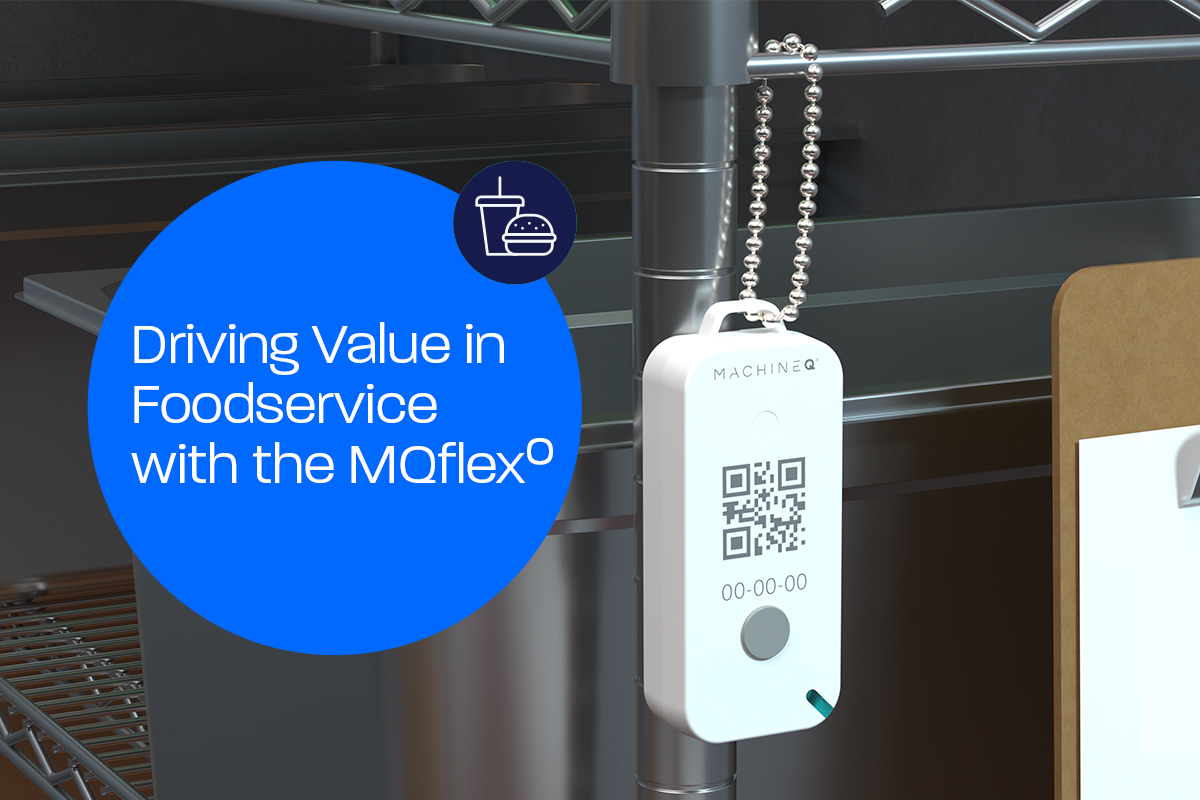
The MQflex° is a temperature and humidity sensing device that helps operators meet their immediate and long-term enterprise-wide needs. Designed to meet the requirements of diverse and demanding foodservice environments, the MQflex° is IP65, ISO17025, EN12830, and NSF 2/51 certified, helping deliver compliance and reliability, with availability in US and certain EU regions, helping enterprises scale as they grow. Engineered with FDA-compliant, food-safe materials, robust battery life, and a sleek, durable design, the MQflex° is built to handle the demands of dynamic foodservice environments, featuring built-in mounting for a tool-free, user-friendly installation.
Ultimately, the right solution should align with both current operational needs and future growth while minimizing friction at every stage, from installation to data integration. There are many moving parts in foodservice operations, but choosing the right devices can go a long way toward helping enterprises succeed.
Temperature Monitoring: The Backbone of Foodservice
Temperature control is an essential variable for helping enhance regulatory compliance and managing food spoilage. Agencies like the FDA and NSF emphasize adherence to “safe” temperature ranges for storage, preparation, and transport, as well as equipment regulations. However, maintaining these conditions consistently across multiple locations and moving assets is challenging.
Temperature monitoring is typically completed manually by employees, who check units periodically throughout their workday. Often, this process is tedious, time-consuming, and prone to error or falsification, where staff log temperature data by hand, taking time away from customers and other pressing priorities. With the MQflex°, restaurant operators can not only automate this process but also enhance reporting.
The MQflex° records temperature data even during power outages and reports backlogged data via an intelligent, interconnected, and centralized system that can be analyzed immediately and furnished for historical audit purposes. Should temperatures fluctuate above or below the required levels, the devices will automatically increase their reporting frequency, so operators receive real-time alerts and can take immediate remedial action. This helps ensure that temperature fluctuations caused by refrigeration failures or doors remaining ajar are addressed swiftly without sacrificing battery life.
Humidity Monitoring: The Overlooked Variable
While often overshadowed by the importance of temperature, humidity plays an equally valuable role in food quality and safety. Improper humidity levels can accelerate spoilage by aiding in packaging degradation, increasing the chances of microbial growth, and affecting ingredient/product texture and shelf life. For instance, high humidity can promote mold growth in fresh produce storage, while low humidity can dry out perishable goods, potentially reducing quality, usability, and inventory management. Furthermore, in refrigerated environments such as convenience stores and retail environments, condensation caused by a lack of humidity control can compromise packaging integrity. Poor humidity management can lead to unnecessary food waste of grab-and-go goods, as faulty packaging conditions can render the items unfit for sale or undesirable to customers.
IoT-enabled humidity monitoring devices such as the MQflex° help operators track and respond to these conditions in real time. When paired with temperature data, it provides a more complete picture, enabling more precise control strategies. Devices that support both temperature and humidity sensing in a single form factor simplify deployment and can reduce the total cost of ownership. Continuous monitoring also enables predictive insights, helping operators identify trends before they become problems.
Sustainability Implications: Efficiency Meets Responsibility
Environmental monitoring is so much more than just a compliance requirement; it also plays a growing role in sustainability initiatives. Food waste is a major global issue, and improper storage conditions are a significant contributor, but finding ways to reduce spoilage and unnecessary waste isn’t enough. Devices like the MQflex° help enterprises support sustainability in several ways, beginning with waste management via temperature monitoring.
Even basic waste-reduction innovations such as sustainable packaging, 10-year replaceable battery life, and simplified installation processes help enterprises manage their environmental impact across the product lifecycle. For enterprises with ESG goals, these benefits are increasingly important for regulatory compliance, stakeholder expectations, and brand positioning.
Discover the Benefits of the MQflex
When evaluating device options, the MQflex° checks all the boxes restaurant operators need to maximize their investment value. It delivers the flexibility, resiliency, and scalability foodservice environments need for competitiveness, performance, and versatility.
Foodservice will always involve complexity, but it doesn’t have to be entirely complicated. By embracing IoT-enabled environmental monitoring, operators can move beyond reactive processes and into a more proactive, data-driven approach. Continuous visibility into temperature and humidity conditions can help strengthen many aspects of foodservice operations, including food safety compliance, identifying opportunities for efficiencies, and waste management.
Enterprises can utilize IoT technology to help add a level of margin protection in an increasingly competitive landscape. The right solution should do more than monitor; it should integrate seamlessly into daily operations, scale alongside business growth, and support broader sustainability goals. Technologies like the MQflex° exemplify this shift, delivering reliable, real-time insights while minimizing operational friction.
In an industry defined by constant change, investing in smarter cold chain management is an investment in long-term success. One thing that will not change in this industry is the importance of food safety, quality, and cold storage compliance.